

Rome wasn’t built in a day, and neither will retrofitting old buildings to meet today’s standards…however, where there is a challenge, lies an opportunity.
There is a certain beauty in buildings that have stood the test of time. Not because they are old for the sake of being old, and not because new buildings do not have value, but because property reflects the purpose they were designed for and the time in which they were built. They tell a small story about Australia’s history.

The challenge comes when those same buildings are expected to respond to modern technology, contemporary compliance requirements, sustainability policy, and operational demands that did not exist when they were first built.
Time doesn’t stand still, nor do requirements. As new knowledge, better technology and higher standards emerge, what was once considered best practice may no longer meet current expectations. This is not a new phenomenon. The building industry has adapted to changing requirements many times before and we are now seeing this shift in sustainability. What was once considered the most efficient option is now being re-evaluated, and the direction of travel is shifting accordingly.
The building itself, however, does not change at the same pace. Buildings are designed for durability and longevity, and modifying their structural form is not a small (nor cheap) task. Sustainability sits squarely within this challenge, but not without reason. Buildings are energy-intensive assets and significant contributors to emissions. As greenhouse gases accumulate in the atmosphere, more pressure is placed on the climate system over time. That build-up is gradual, but its effects are cumulative and that is why building performance now matters more than it once did.

This has become the basis for intervention.
Sustainability policy is a response to that pressure, and buildings sit at the centre of it. Within government property, this focus is now reflected in expectations relating to building performance, asset upgrades, and the management of energy use over time. While the Net Zero in Government Operations (NZGO) strategy is intended to support positive climate action, delivery is often approached through an all or nothing lens and is constrained by the interaction of ageing infrastructure, multi-layered policy requirements, limited capital funding, and competing operational priorities.
Once applied in practice, these expectations do not operate independently and retrofitting older buildings is inherently complex. Existing layouts, infrastructure and integrated systems can limit the scope for change. Measures that appear feasible in theory may require major modification and significant cost to deliver.
For Commonwealth-owned properties, this complexity does not sit in isolation. The building is only one aspect of what determines how much can be achieved and decisions are made within a broader system. The NZGO Strategy sits inside a governance environment that includes the Public Governance, Performance and Accountability Act 2012, the Commonwealth Property Management Framework, the Capital Works Approval Process, the Budget Operating Rules (and budget process), heritage legislation, state planning frameworks, and the Public Works Committee Act 1969, amongst others.
These are not minor administrative details, they are the mechanism which any physical change to a government building is planned, funded, and approved and in reality they do not always move in the same direction at the same time.
Each of these frameworks exist for good reason, and each plays a legitimate role in how government manages public assets, public money, and the built environment. However, they were not designed with sustainability as the guiding principle and therefore can also become the reason that progress in sustainability can stall. The conditions required to satisfy them all is genuinely hard to achieve with an older asset. There is an economic argument for acting now that is worth taking seriously. A dollar spent today is not the same as a dollar spent tomorrow, not just in the same obvious inflationary way, but because the consequences of delayed emissions reduction will compound over time. Carbon that is not avoided today is not simply deferred, it accumulates (for a long time) and the cost of addressing the downstream effects will not be cheaper.

However, there is a second argument that sits alongside that, and it is equally real when balancing environmental, economic and social sustainability: the technology that exists today will not be the same as the technology of tomorrow either. The electrification solutions available now are not the height of what will be available in five or ten years. In some cases, an upgrade that would require significant and costly infrastructure modification today may be achievable with considerably less disruption in a future cycle, using technology that does not yet exist at a commercial scale.
This is not an argument for waiting, it is an argument for thinking carefully about prioritisation in line with policy objectives and timelines to understand what needs to be prioritised now and what may benefit from a more considered timeline, with careful planning.
The compounding cost of delay and the improving capability of future technology create a genuinely complex optimisation problem that requires big picture planning as well as asset-by-asset analysis, lifecycle thinking and investment sequencing that is informed by both the urgency of the emissions problem and an honest assessment of what is technically and financially achievable in each cycle. The practical consequence of approaching this from an all or nothing lens means that buildings are either fully upgraded or not touched. Progress that is planned appropriately and grounded in what is practically achievable is exactly what the policy is saying.
Progress is significantly harder to achieve without first understanding the broader context. Approaching individual components in isolation can lead to time and money being spent on feasibility work that does not translate into delivery, and investment decisions being made without a clear view of priorities or cumulative impact.
Effective planning is essential in understanding approval pathways, the relationship between immediate requirements and longer-term objectives, the influence of budget cycles on timing, and the effect of physical constraints on delivery. It also supports better decision-making, while recognising that not every initiative will proceed as originally intended.
A well-considered approach looks at the system as a whole. Afterall, we cannot understand how an elephant functions by just analysing its tail.
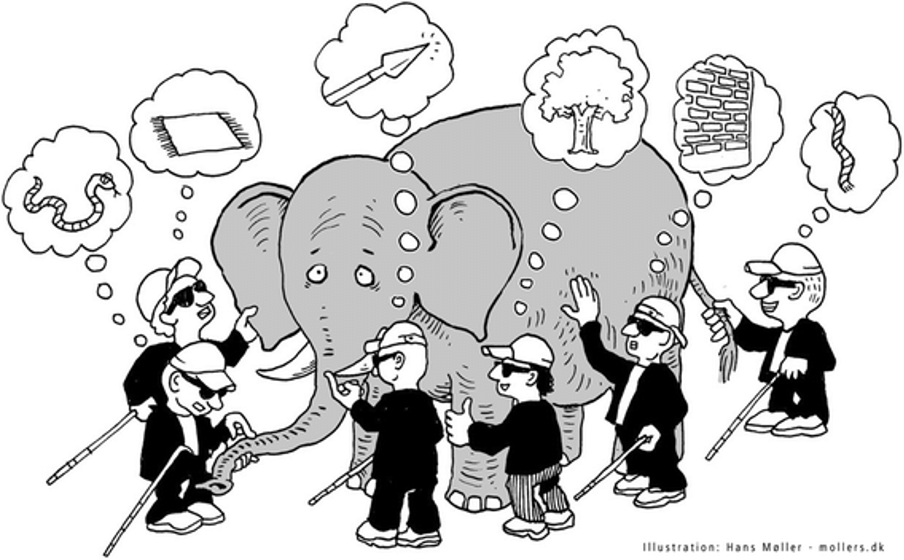
Looking at the bigger picture helps create a practical pathway forward, even where full funding is not available, planning constraints limit what can proceed, or the building cannot accommodate a particular intervention. It allows immediate requirements to be addressed, incorporates what can be delivered through planned lifecycle upgrades, and retains a clear line of sight to what follows.
Rome wasn’t built in a day. But it was built. And the people who built it did not wait until they could build everything at once before they laid the first stone.